Mattress Materials & Sleep
Organic Latex Explained: Certifications, Materials, and Feel
Organic latex can sound like a straightforward label: a natural material, grown organically, made into a mattress. In practice, the story is more layered. The latex source, processing methods, blend, certifications, and finished construction all matter—and they can influence both what a label means and how a sleep surface feels.
Here’s a clear-eyed guide to the details worth checking, from GOLS certification to firmness and care, so you can compare organic latex bedding without relying on a single reassuring word on a tag.
First, what is latex?
Latex is a flexible material made from liquid collected from rubber trees, most commonly Hevea brasiliensis. In mattress and pillow construction, that liquid is processed into a foam. The result is a springy material that compresses under pressure and tends to recover its shape when pressure is removed. This responsive quality is one reason latex feels different from materials that slowly contour around the body.
“Latex” by itself does not tell you whether a product is organic, how much latex it contains, whether it is blended with synthetic ingredients, or how the finished piece was made. A label may refer to the latex layer, a component within a larger mattress, or a product’s marketing description. Reading the full materials list—and checking what a certification actually covers—provides a more useful picture.
Latex foam is often formed using one of two processes: Dunlop or Talalay. Both begin with latex, but the manufacturing steps differ. In a simplified description, Dunlop latex is poured into a mold and baked. Talalay latex is poured into a mold that is only partly filled, expanded, frozen, and then vulcanized. Those process differences can affect the foam’s structure and feel, but neither name alone establishes that the latex is organic. For that, look for relevant certification and precise product information.
What “organic latex” can—and can’t—tell you
The phrase “organic latex” generally signals that latex comes from rubber trees grown under organic requirements. But the claim should be tied to a recognizable standard and to the particular material being described. A mattress is a finished product made from several components: it may include latex, cotton, wool, coils, adhesives, thread, and a cover. A claim about one of those materials should not automatically be understood as a claim about every part of the mattress.
That distinction matters because bedding labels often use several terms at once: organic, natural, renewable, low-emission, or chemical-conscious. Each describes something different. “Natural” may refer to a material’s origin, but does not by itself prove organic agricultural practices. “Organic” is a claim about how a material was produced under a defined standard. “Low-emission” relates to emissions, while “renewable” concerns whether a resource can be replenished. No one phrase answers every question about a product.
It is also worth distinguishing latex content from the finished foam. A product described as “natural latex” may still contain other ingredients or be combined with synthetic latex. The percentage and composition can vary. If the information is not clear, look for a detailed materials disclosure or ask the manufacturer what the label applies to. Straight answers should identify the component, the material, and the certification scope rather than relying on broad environmental language.
GOLS certification: what the label is for
The Global Organic Latex Standard, commonly shortened to GOLS, is a certification standard for organic latex. In general, it addresses organic material content and requirements along the certified supply chain, including processing and traceability. For shoppers, a GOLS claim can offer more specific information than an unqualified “organic latex” phrase—provided the certification applies to the latex in the product being considered.
Certification is not a universal guarantee that a mattress is entirely organic, chemical-free, or suitable for every person. Its scope matters. A certified latex core, for example, is not necessarily proof that the cover, fire barrier, stitching, or every other mattress component carries the same certification. Nor does a certificate tell you whether the mattress will feel comfortable, fit your bed frame, or suit your sleep preferences.
When you see a GOLS claim, check the product’s supporting details. Is the named product or component included in the certification? Is the certificate current? Does the seller identify the certified material clearly? Manufacturers and retailers may publish certification documents or explain the scope on a product page. If they do not, ask before treating the claim as applying to the entire finished item.
Other certifications may apply to different materials or concerns. For example, an organic textile certification can relate to fiber production and textile processing rather than latex foam. These standards can complement one another, but they are not interchangeable. A useful habit is to match each certification to the material it covers instead of counting logos as though they all mean the same thing.
A closer look at materials and construction
Before comparing the feel of two mattresses, compare what is inside them. A latex mattress might be built from one solid latex core, several latex layers, or latex combined with other materials. Wool or cotton may be used in the comfort layers or cover. Some designs also include pocketed coils, which create a hybrid construction with a different support system beneath the latex.
Layer thickness and position affect the experience. A softer latex layer near the surface may provide more initial cushioning, while a firmer layer underneath can contribute support. A single-piece core may feel more uniform, although its firmness can still vary by design. In a hybrid mattress, the coil unit and latex layer work together, so the surface feel is not determined by latex alone.
Consider the cover and any natural fibers as part of the overall build, not as decorative details. Cotton can provide a fabric covering, while wool may be used in upholstery or as part of a fire-barrier design. Materials and construction vary by product, so avoid assuming that every organic latex mattress uses the same recipe or has the same performance.
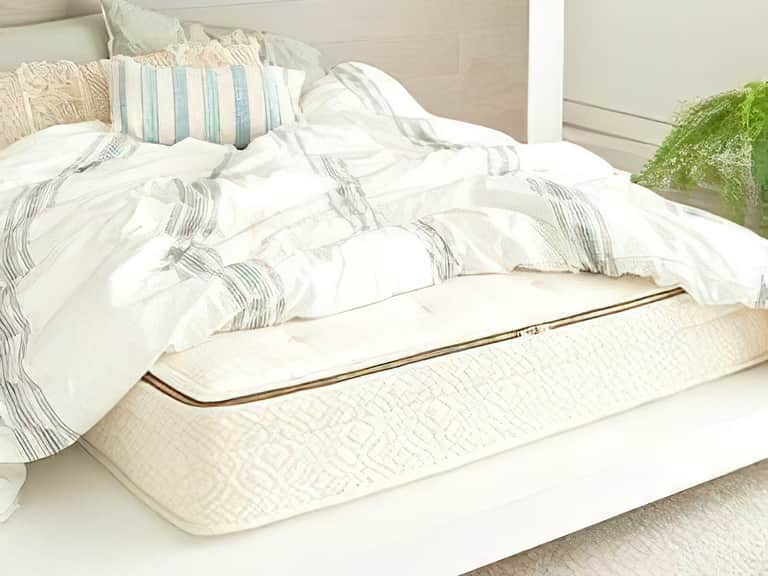
As one example of a hybrid approach, the Naturepedic Azure Hybrid Organic Mattress is described as combining organic Dunlop latex with wrapped coils, along with wool, alpaca, and cashmere. Its description lists a 6-inch coil unit and 3 inches of latex within a 10-inch profile. It illustrates why the overall feel of a mattress depends on the whole construction rather than the latex label alone. Check the product’s current specifications and certification details directly when evaluating it.
What does organic latex feel like?
Latex is often described as buoyant, resilient, or responsive. Those words point to a surface that pushes back as it compresses and recovers relatively quickly when you move. Some sleepers appreciate that quality because it can make changing position feel easy. Others prefer the slower, closer contour of a different foam. Neither preference is more correct; it is a matter of comfort and how a particular design feels to an individual.
There is no single “latex feel.” Firmness, density, thickness, layer arrangement, and the materials around the latex all play a part. A soft latex comfort layer can feel quite different from a firm latex core. A thick layer may create more cushioning than a thin one, while a hybrid’s coils can change how the whole surface responds. Even two products described as Dunlop latex may not feel identical.
Firmness descriptions are not perfectly standardized across brands. One company’s medium may feel firmer or softer than another’s, and body weight, sleep position, and personal sensitivity can change how a surface is perceived. If possible, try the mattress in person or review the return and trial terms before buying. A specification can help narrow choices, but it cannot replace your own comfort test.
When trying a mattress, give it more than a few seconds. Lie in your usual sleep position and notice whether your body feels supported without uncomfortable pressure. Pay attention to your shoulders and hips if you sleep on your side, and to whether your lower back feels comfortably supported in other positions. These are subjective observations, not a medical assessment. Persistent pain or sleep problems deserve advice from a qualified health professional rather than a mattress label alone.
Latex, temperature, and motion
Some people look to latex because it has a different feel from dense, slow-response foam. Its open or perforated construction may allow airflow, depending on the design, and its responsive surface may feel less enveloping to certain sleepers. But no material guarantees that a mattress will sleep cool. Room temperature, bedding, mattress cover, humidity, and personal comfort all contribute to the sleep environment.
Similarly, latex’s resilience can make movement feel easy, but it does not automatically mean that motion is either fully isolated or highly noticeable. The mattress’s layer arrangement, base, and construction affect how movement travels. Couples who are sensitive to a partner’s movement should consider the complete design and, when possible, test it together.
Organic certification is not a performance rating. It does not tell you how cool a mattress will feel, how long it will last, or whether it will prevent discomfort. Treat certification, construction, and comfort as related but separate questions.
Natural latex and synthetic latex are not the same claim
Natural latex comes from rubber-tree sap. Synthetic latex is manufactured from petrochemical ingredients. Some products use a blend. The wording on product listings can be imprecise, so look for an explicit description of composition rather than assuming “latex” means 100% natural material.
Even when latex is natural, it has been processed to become foam. “Natural” does not mean unprocessed, and “organic” does not mean that every ingredient in a finished mattress is organic. A trustworthy description should make clear what material is used, where it sits in the product, and which standard—if any—verifies its sourcing or processing.
People with a known latex allergy should take the issue seriously and consult a healthcare professional about exposure and appropriate precautions. Mattress construction can include latex beneath a cover, but a covered layer should not be treated as a medical guarantee of safety. Product specifications may help clarify the materials; a clinician can offer guidance tailored to an individual’s allergy history.
Care and longevity: follow the maker’s instructions
Latex mattresses can be heavy, and their care needs vary by design. Start with the manufacturer’s directions for the core, cover, and foundation. Some covers are removable and washable; others are not. Washing a non-removable cover, soaking latex foam, or applying strong cleaning products may damage materials or affect a warranty.
Use a supportive base that meets the mattress maker’s requirements. Slats may need a particular spacing, and some designs may call for a solid or otherwise specified foundation. An unsuitable base can affect support and may cause problems that are mistakenly blamed on the latex itself. Check the instructions before setting up the mattress.
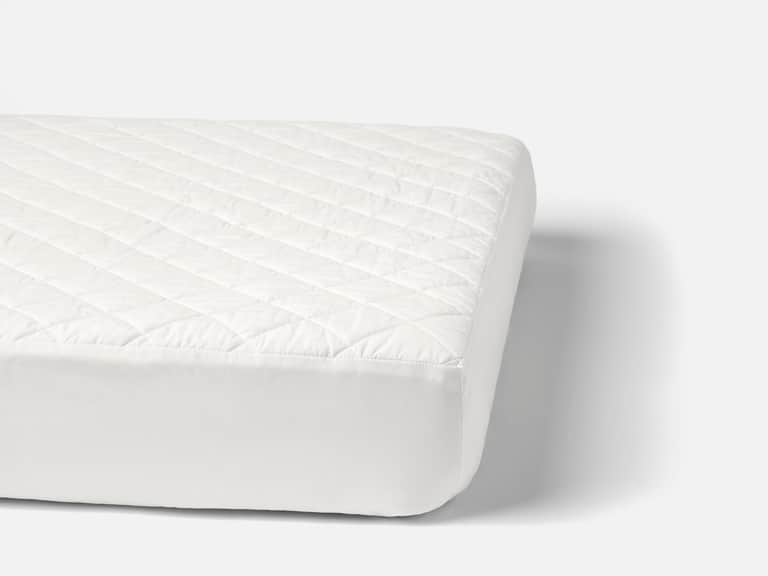
A mattress protector can help limit exposure to spills, sweat, and everyday soil. Choose one that fits securely and does not bunch beneath the sheet. If a mattress is designed with a particular feel or airflow in mind, consider whether a thick or tightly structured protector changes that surface sensation. Follow care instructions for the protector, too.
Rotating or flipping is not a universal rule. Some latex mattresses are designed to be rotated, while others have distinct top and bottom layers and should not be flipped. Follow the product guidance rather than assuming that a familiar routine applies to every mattress. With heavy bedding, asking for help to rotate it can reduce the risk of injury.
A practical checklist for comparing organic latex
Product pages can make competing mattresses sound remarkably similar. These questions help turn broad claims into useful comparisons:
- What is the latex source? Look for a clear statement identifying natural, synthetic, or blended latex.
- Which component is certified? Confirm whether GOLS certification applies to the latex layer, the core, or another specified part.
- What else is in the mattress? Check the materials in the cover, comfort layers, fire barrier, and support system.
- How is it built? Note whether it uses Dunlop or Talalay latex, multiple layers, a single core, or a hybrid coil unit.
- How is firmness described? Compare the manufacturer’s scale and, if available, layer details rather than relying on one word.
- What foundation does it require? Confirm compatibility with your existing frame and any slat-spacing guidance.
- What are the care instructions? Find out whether the cover is removable and how spills or stains should be handled.
- What happens if it is not comfortable? Read the trial, return, exchange, delivery, and warranty terms before purchase.
The goal is not to find the mattress with the longest list of labels. It is to understand what each label verifies and whether the full construction fits your needs. A certification can help you evaluate sourcing and processing; it cannot make the comfort decision for you.
Common claims, put into perspective
“Chemical-free” is often used as a reassuring phrase, but it is not a precise description: all physical materials consist of chemicals. Ask instead what ingredients or treatments are present, whether a named standard applies, and what documentation supports the claim. Specific answers are more meaningful than a broad promise.
“Hypoallergenic” also deserves context. It is not a guarantee that a product will prevent allergies or suit everyone. People can respond differently to materials, dust, or other aspects of a bedroom environment. If you have a diagnosed sensitivity, review the full materials and discuss relevant concerns with a medical professional.
And “organic” should not be confused with “automatically better for every sleeper.” It may be important to someone prioritizing verified sourcing, but the right firmness, a suitable base, sound construction, and a comfortable sleep surface remain essential. The best choice is the one that meets your priorities with clear, verifiable information.
The bottom line
Organic latex offers a material story worth examining, not simply a label to take at face value. Start with the source and composition, then see whether GOLS certification applies to the specific latex component you care about. Compare the full build—including layers, cover, and any coils or natural fibers—and treat feel as its own question.
Latex’s signature resilience may appeal to sleepers who like a responsive surface, but firmness and comfort depend on more than the material name. A careful comparison can help you balance sourcing, certification, construction, care, and personal preference. The clearest product descriptions make those details easy to find—and leave room for you to decide what matters most.
Quick answers
Does GOLS certify an entire mattress?
Not necessarily. Certification scope can apply to a particular latex material or component. Check the documentation to see exactly what is covered rather than assuming every part of the finished mattress is certified.
Is organic latex always made with the same process?
No. Latex may be processed using different methods, including Dunlop and Talalay. Those names describe manufacturing approaches; they do not, by themselves, prove that latex is organic.
Does organic latex always feel firm?
No. Feel depends on firmness, thickness, layer arrangement, and the rest of the mattress construction. Product descriptions can help, but an in-person test or clearly stated trial policy can make comparison more practical.
What should I check first when shopping?
Begin with the complete materials list and the scope of any certification. Then compare construction, firmness, foundation requirements, care instructions, and return terms.